
Liquidity Sweep
30-Second Definition
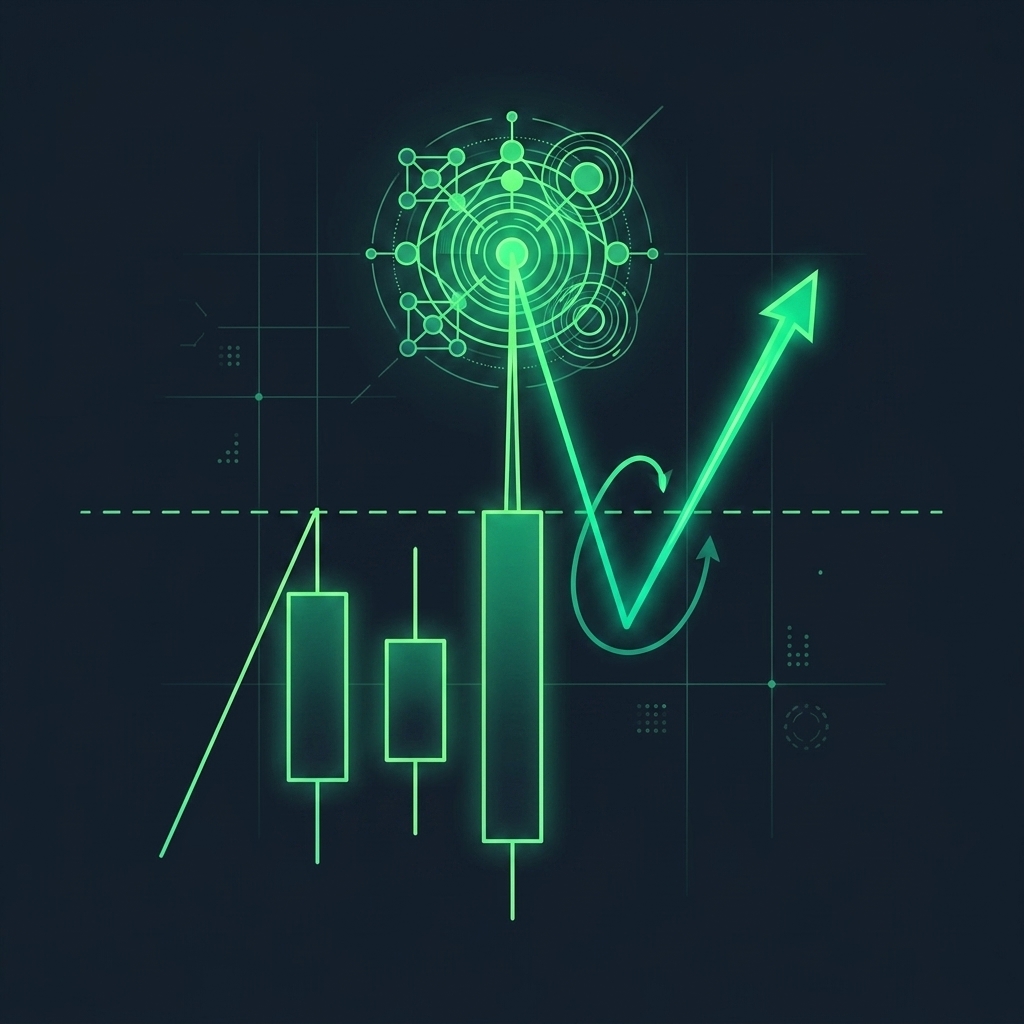
A sudden, aggressive price movement that pierces a major support or resistance level to trigger resting stop losses, followed immediately by a sharp reversal.
Why It Matters
A Liquidity Sweep (commonly known in retail trading as a “Stop Hunt” or “Fakeout”) is the physical mechanism by which Smart Money fills their massive institutional orders.
Markets do not move randomly; they move from one pool of liquidity to another. When price approaches a highly obvious technical level (like a trendline or a daily low), retail traders place their stop losses just past it. A Liquidity Sweep occurs when algorithms intentionally push price through that level for a few seconds or minutes, trigger all the retail stops to absorb the volume, and then aggressively reverse direction. Recognizing a sweep is the foundation of institutional trading.
Visual Explanation
Real Trading Example
The GBPUSD pair has been forming a very clean support line at 1.2500 all morning. Retail traders are buying off this support and placing their stop losses at 1.2490.
Just before the New York session opens, the price suddenly crashes to 1.2485. All the retail long traders are stopped out for a loss. The breakout traders see the support line break and instantly short the market.
Within two minutes, the 15-minute candle closes all the way back up at 1.2510, leaving behind a massive long lower wick. The price then rockets upward 100 pips over the next hour. The drop to 1.2485 was a Liquidity Sweep. Institutions needed to trigger those sell stops to buy GBPUSD at a discount before the real markup phase began.
Common Mistakes
Common Mistake
Trading the Immediate Break: Beginners see a candle poke through a major level and immediately enter a trade in the direction of the break. By doing this, they are falling directly into the liquidity trap and providing the exact orders the institutions need to reverse the market against them.
Professional Tips
Pro Tip
Wait for the Close: The defining characteristic of a Liquidity Sweep versus a genuine Break of Structure (BOS) is the candle close. A sweep typically pierces the level but closes back inside the range, leaving a long wick. Never enter a breakout trade based on the wick; wait for the body of the candle to close firmly past the level.
FAQ
How do I trade a Liquidity Sweep?
You trade the reaction to the sweep. Wait for the market to sweep an obvious pool of liquidity (like the Asian Session High). Once the sweep occurs and the candle closes back below the level, wait for a Change of Character (CHOCH) on a lower timeframe to confirm the institutional reversal, and enter there. For a complete session-open workflow built on this pattern, see the opening liquidity strategy guide.
Are brokers manipulating my stop loss?
Usually, no. In the modern era, regulated brokers do not hunt your specific 0.10 lot stop loss. The Liquidity Sweep is a macro market phenomenon driven by massive institutional algorithms hunting aggregate pools of thousands of retail orders, not your specific account.
What is the difference between a Sweep and an Inducement?
Inducement is the creation of a fake level (like a trendline) designed to trick retail traders into entering early and placing their stops. The Liquidity Sweep is the actual execution of breaking that level to take those stops.
Related Concepts
Still have questions? Ask TradeGuardian AI.
Get instant, cited answers from our proven library of frameworks and strategies.