
Consolidation
30-Second Definition
A period where the market moves sideways within a defined range, indicating a balance between buyers and sellers and a pause in the overall trend as institutions accumulate or distribute positions.
Why It Matters
Consolidation (also known as a range, chop, or sideways market) is where retail traders lose the majority of their money. When a market is trending, trading is relatively straightforward. But when a market enters consolidation, it becomes a chaotic meat-grinder of false breakouts and sweeping wicks.
However, from an institutional perspective, consolidation is critical. Smart Money cannot buy 100,000 lots of an asset all at once; if they did, they would instantly spike the price and get a terrible average entry. Instead, they keep the price contained within a specific range (consolidation), quietly absorbing retail sell orders over time until their massive position is completely filled. Once the accumulation is complete, the consolidation ends with a violent breakout.
Visual Explanation
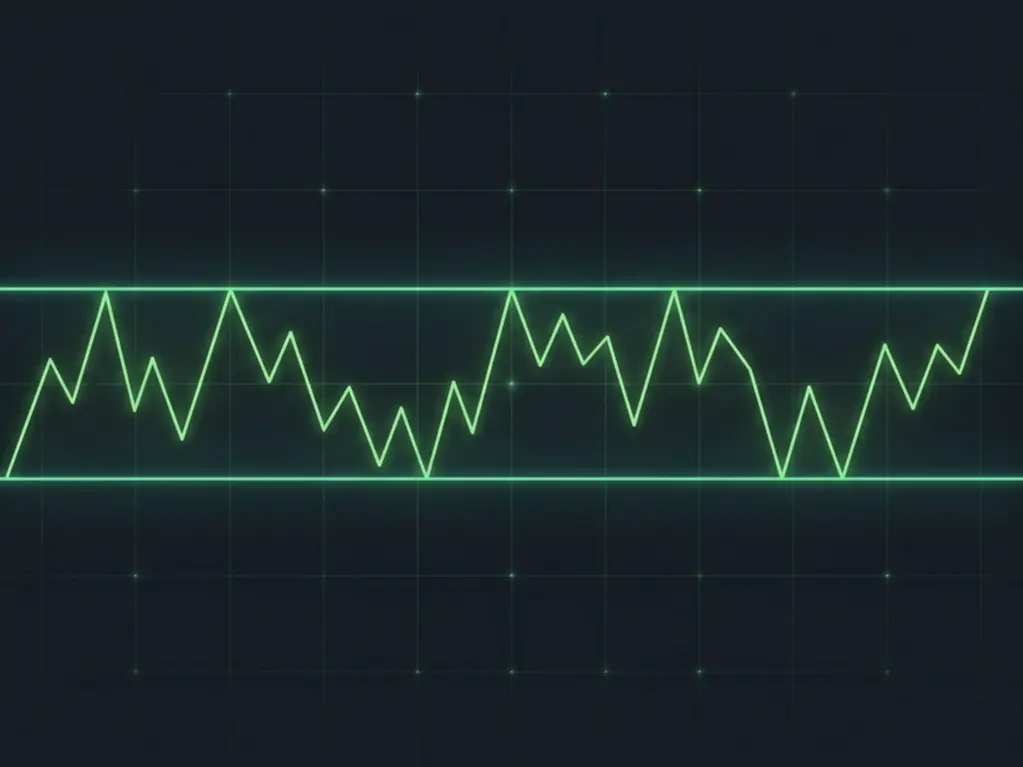
Real Trading Example
During the Asian Session, the volume in the GBPUSD market drops significantly. The price becomes trapped between 1.2500 (support) and 1.2520 (resistance). For six hours, the price just bounces randomly within this tiny 20-pip box. This is Consolidation.
Retail traders, addicted to action, try to trade this chop. They buy at 1.2505, but the price drops to 1.2500. They sell at 1.2515, but the price spikes to 1.2520. They are slowly bled dry by commissions and spread.
The London Session opens. Institutions, having quietly accumulated their long positions inside that 20-pip box all night, finally inject massive volume. The price violently breaks out of the consolidation ceiling at 1.2520 and trends upward for 100 pips. The retail traders were chopped up in the consolidation and missed the actual move.
Common Mistakes
Common Mistake
Trading Trend Strategies in a Range: The most common error is applying a trend-following system (like moving average crossovers) inside a consolidation zone. The indicators will give false signals constantly, telling you to buy the top of the range and sell the bottom. You must identify the market condition before you apply the strategy.
Professional Tips
Pro Tip
Sit on Your Hands: The highest probability action to take during a tight consolidation is absolutely nothing. Let the retail traders fight over pennies. Wait for the market to eventually break out of the range, let it manipulate and sweep the early breakout traders, and then enter the real trend once it is established.
FAQ
How do I know if the market is consolidating?
If you look at your chart and cannot easily point out clear Higher Highs or Lower Lows, the market is likely consolidating. Price will look messy, overlapping, and horizontally contained.
Can you trade a consolidation?
Yes, if the range is wide enough (e.g., a 100-pip range on a 4H chart). You can buy the support floor and sell the resistance ceiling. However, you must be extremely disciplined with your take-profits, as the price will eventually break the range and stop you out.
What is the difference between Accumulation and Distribution?
Both are forms of consolidation. Accumulation is a consolidation phase where institutions are quietly buying (usually before a bullish uptrend). Distribution is a consolidation phase where institutions are quietly selling their profits to retail traders (usually before a bearish downtrend).
Related Concepts
Still have questions? Ask TradeGuardian AI.
Get instant, cited answers from our proven library of frameworks and strategies.