
Evaluation Phase
30-Second Definition
The Evaluation Phase is the testing period required by a proprietary trading firm to assess a trader’s profitability and risk management skills before granting access to a funded account.
Understanding the Evaluation Phase
The Evaluation Phase is the overarching term for the testing process deployed by proprietary trading firms. Because firms are taking on the financial risk of backing a trader, they require applicants to prove their ability to generate profits while adhering to strict drawdown limits in a simulated environment.
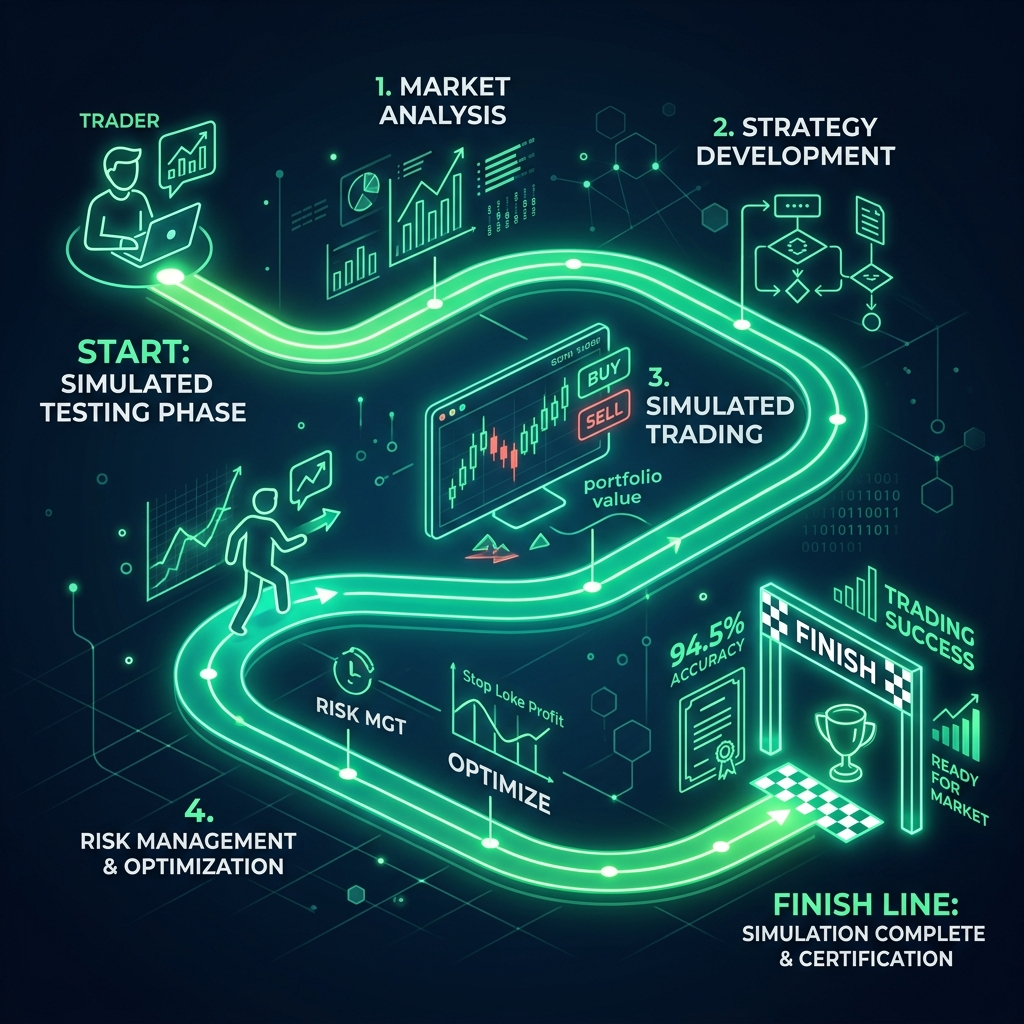
Most modern prop firms divide their Evaluation Phase into a two-step process: the Challenge Phase (Step 1) and the Verification Phase (Step 2). However, 1-step and 3-step evaluations also exist.
Key Characteristics
- Simulated Environment: All trading during the evaluation is done on demo accounts.
- Profit Targets: Traders must hit a specific percentage gain (e.g., 8% or 10%).
- Drawdown Limits: Strict rules govern maximum daily loss and maximum overall drawdown.
- Minimum Trading Days: Some firms require you to place trades on a minimum number of individual days to prove consistency.
- Upfront Fee: Traders pay a non-refundable evaluation fee, which is often reimbursed if they successfully pass and reach their first live payout.
Why It Matters
The evaluation phase is the primary barrier to entry in the prop firm industry. Treating it simply as a race to a profit target usually results in failure. Instead, the evaluation is a test of risk management. Firms are less interested in your ability to make 10% in a day, and more interested in your ability to avoid losing 5% in a day.
Visual Explanation
Real Trading Example
A trader buys a $100,000 evaluation. To pass, they must make an $8,000 profit without letting their equity drop below $90,000 (10% max drawdown) or lose more than $5,000 in a single day (5% daily limit).
The trader risks 1% ($1,000) per trade. They win 4 trades and lose 2, bringing their balance to $102,000. They continue executing their strategy until the account hits $108,000, passing the evaluation without ever coming close to breaching the drawdown limits.
Common Mistakes
Common Mistake
Changing Strategy to Pass: Many traders have a strategy that yields 3% a month. To hit an 8% evaluation target, they drastically increase their risk or take sub-optimal setups. This usually triggers a drawdown breach.
Professional Tips
Pro Tip
Focus on the Drawdown, Not the Target: The profit target is just a destination; the drawdown limit is the cliff edge. Build your position sizing model around surviving the drawdown limit. If your risk is managed, the edge will eventually hit the target.
FAQ
Do I have to pay to take an evaluation? Yes, prop firms charge an upfront fee to cover infrastructure costs and filter out non-serious applicants. It is typically refunded if you pass and reach your first payout.
Is there a time limit on the Evaluation Phase? Historically, firms required you to pass within 30 days. However, the industry standard has shifted, and most reputable firms now offer unlimited time to pass.
Can I try again if I fail? Yes, but you will have to pay for a new evaluation. Some firms offer a free retry if you end the evaluation period in profit but fail to hit the profit target, though this is less common now with the removal of time limits.
Still have questions? Ask TradeGuardian AI.
Get instant, cited answers from our proven library of frameworks and strategies.