
Pullback
30-Second Definition
A temporary reversal in price direction that occurs within a larger prevailing trend. A pullback represents a brief period of profit-taking or minor counter-trend momentum before the primary trend resumes.
Why It Matters
A Pullback (also known as a retracement or “the dip”) is the mechanism that provides traders with high-probability, high-reward entries.
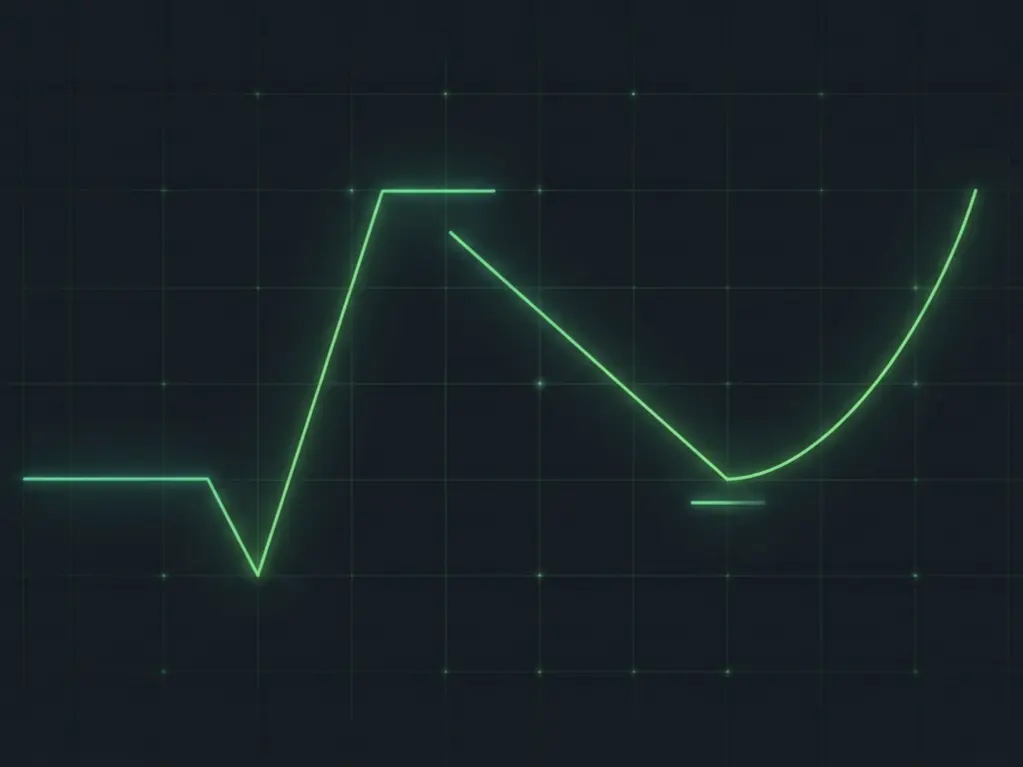
When a market is trending strongly, it expends massive amounts of energy (buying power) to create an impulse wave. Eventually, that buying power dries up, and early investors begin taking their profits. This causes the price to temporarily drop against the uptrend. This is the Pullback.
Professional traders almost never buy during the impulse wave because the price is too expensive (Premium) and the stop loss is too wide. Instead, they wait patiently for the pullback. The pullback brings the price down to a cheaper, discounted level, allowing the trader to enter the trend with a tight stop loss right before the next impulse wave begins.
Visual Explanation
Real Trading Example
The Nasdaq 100 has just broken out of consolidation and surged 150 points in a massive green impulse wave.
A FOMO trader buys at the absolute top of the surge. Immediately, institutions begin taking profit, and the price drops 50 points over the next hour. The FOMO trader panics and takes a loss.
This 50-point drop is a normal, healthy Pullback. A professional trader was waiting for this exact drop. They draw a Fibonacci Retracement tool on the impulse wave and notice the price has pulled back exactly into the 50% discount zone, perfectly aligning with a previous support level. They buy the dip. The selling pressure ends, and the Nasdaq surges another 200 points, rewarding the patient trader.
Common Mistakes
Common Mistake
Confusing a Pullback with a Reversal: The hardest skill in trading is knowing whether a drop in price is just a temporary pullback or the start of a massive crash. If the drop breaks a major structural Higher Low (a Change of Character), it is a reversal. If the structural low holds, it is just a pullback.
Professional Tips
Pro Tip
Look at the Speed: The nature of the price action often reveals its intent. An institutional impulse wave is fast, violent, and composed of large candles. A healthy pullback is usually slow, choppy, and composed of many small, overlapping candles. If the pullback drops faster than the original impulse went up, stay out.
FAQ
How deep should a pullback go?
While pullbacks can vary, institutional algorithms commonly retrace price back to at least the 50% mark of the previous impulse wave, or deeper into the 61.8% to 78.6% Fibonacci discount zones, to grab sufficient liquidity before continuing.
What is a “Complex Pullback”?
A complex pullback is a retracement that takes a long time and develops its own internal structure (like a mini-downtrend with its own lower highs and lower lows) before finally bottoming out and resuming the macro uptrend.
Is a Retest the same thing as a Pullback?
Yes, fundamentally. A “Retest” is simply a specific type of pullback where the price specifically returns to test a recently broken structural level (like a broken trendline or resistance zone).
Related Concepts
Still have questions? Ask TradeGuardian AI.
Get instant, cited answers from our proven library of frameworks and strategies.