
Greed
30-Second Definition
The intense, emotional desire for excessive profit that causes a trader to abandon mechanical risk rules, ignore take-profit targets, and overleverage their account.
Why It Matters
Greed is the most intoxicating emotion in trading. While fear prevents you from making money, greed actively destroys the money you have already made. It tricks the brain into believing that a current winning streak is proof of genius, rather than a statistical probability playing out.
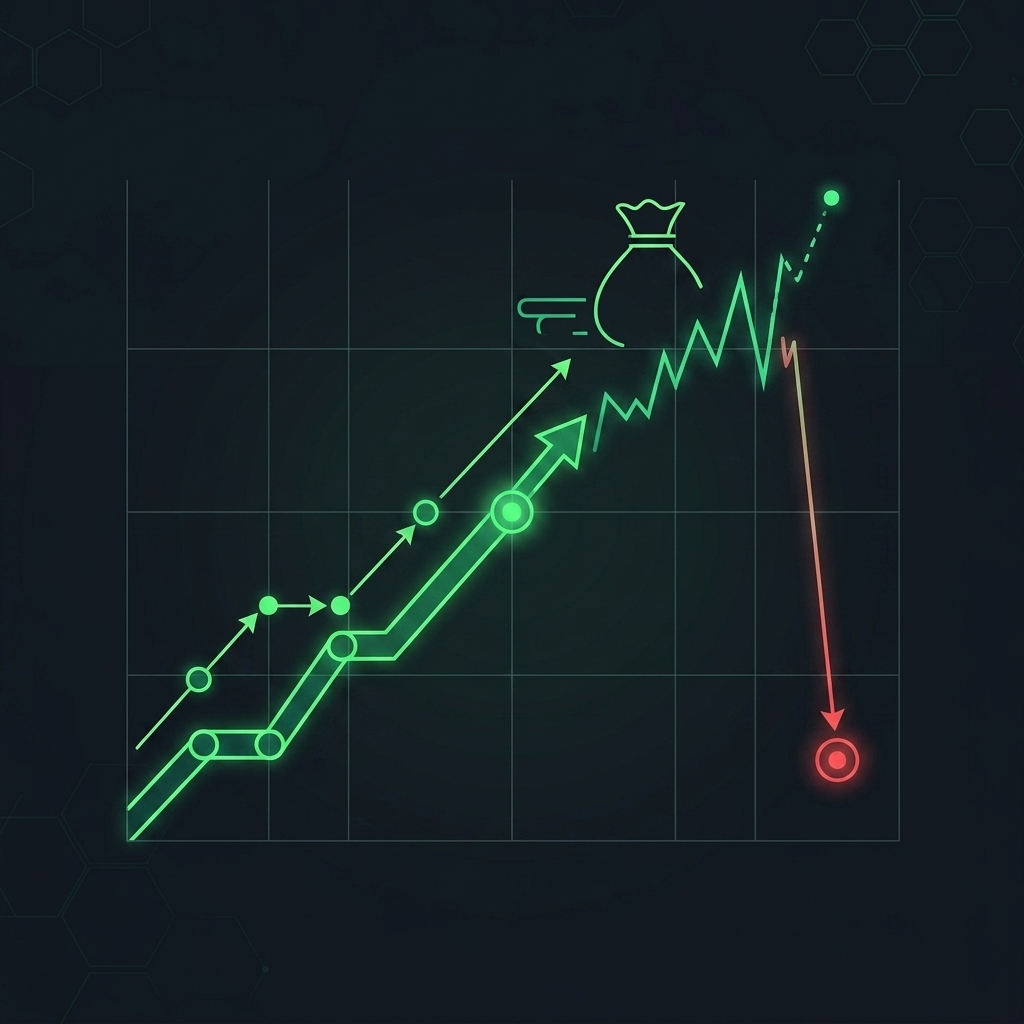
Greed manifests in two primary ways: Overleveraging (risking massive amounts of capital to get rich quick) and Ignoring Exits (refusing to close a winning trade at a logical target because you want “just a little more”). Both behaviors break the mathematical framework of a trading system and inevitably lead to catastrophic losses.
Visual Explanation
Real Trading Example
A trader is up 3% on their prop firm evaluation. They enter a long position on Gold.
The market surges in their favor, reaching their predefined Take Profit level at a major resistance zone. If they close the trade now, they will secure a 2% gain, bringing them to 5% total (halfway to passing the evaluation).
However, greed takes over. The trader sees the massive green candle and thinks, “If I hold this for another hour, I could pass the entire evaluation today.” They manually delete their Take Profit order. Ten minutes later, the resistance holds firm. Institutions dump their positions, and Gold crashes 200 pips. The trader’s massive unrealized gain turns into a 2% loss. Greed stole a secured victory.
Common Mistakes
Common Mistake
The Lottery Ticket Mentality: Greed convinces amateurs they can turn a $100 account into $1,000,000 in a month. They risk 20% of their account on a single trade, treating the financial markets like a casino roulette wheel rather than a business of probabilities.
Professional Tips
Pro Tip
Automate Your Exits: The best way to combat greed is to remove the ability to make decisions while in a trade. Use mechanical Take Profit orders placed directly on the broker’s server. Once the trade is active, walk away from the screens. Let the math do the work.
FAQ
Is wanting to make a lot of money considered greed?
No. Ambition is required to succeed in trading. Greed is specifically the abandonment of logic and risk management in the pursuit of money. A professional trader makes millions by robotically executing a 1% risk strategy over thousands of trades. An amateur goes bankrupt trying to make millions on one trade.
How do prop firms punish greedy trading?
Proprietary trading firms use strict rules like the Maximum Daily Loss (usually 5%) and Consistency Rules specifically to identify and terminate greedy, gambling behavior. They want consistent, low-risk returns, not wild, greedy swings.
How do I know if I am being greedy?
If you are moving your Take Profit further away while a trade is active because you “feel” it will keep going, or if you are significantly increasing your Lot Size after a string of wins, you are operating on greed.
Related Concepts
Still have questions? Ask TradeGuardian AI.
Get instant, cited answers from our proven library of frameworks and strategies.