
Slippage
30-Second Definition
The difference between the expected price of a trade and the actual price at which the trade is executed by the broker.
Why It Matters
Slippage exposes the hidden risk in mechanical trading. A Stop Loss order is technically a “Market Order” triggered at a specific price. When triggered, the broker executes it at the next best available price.
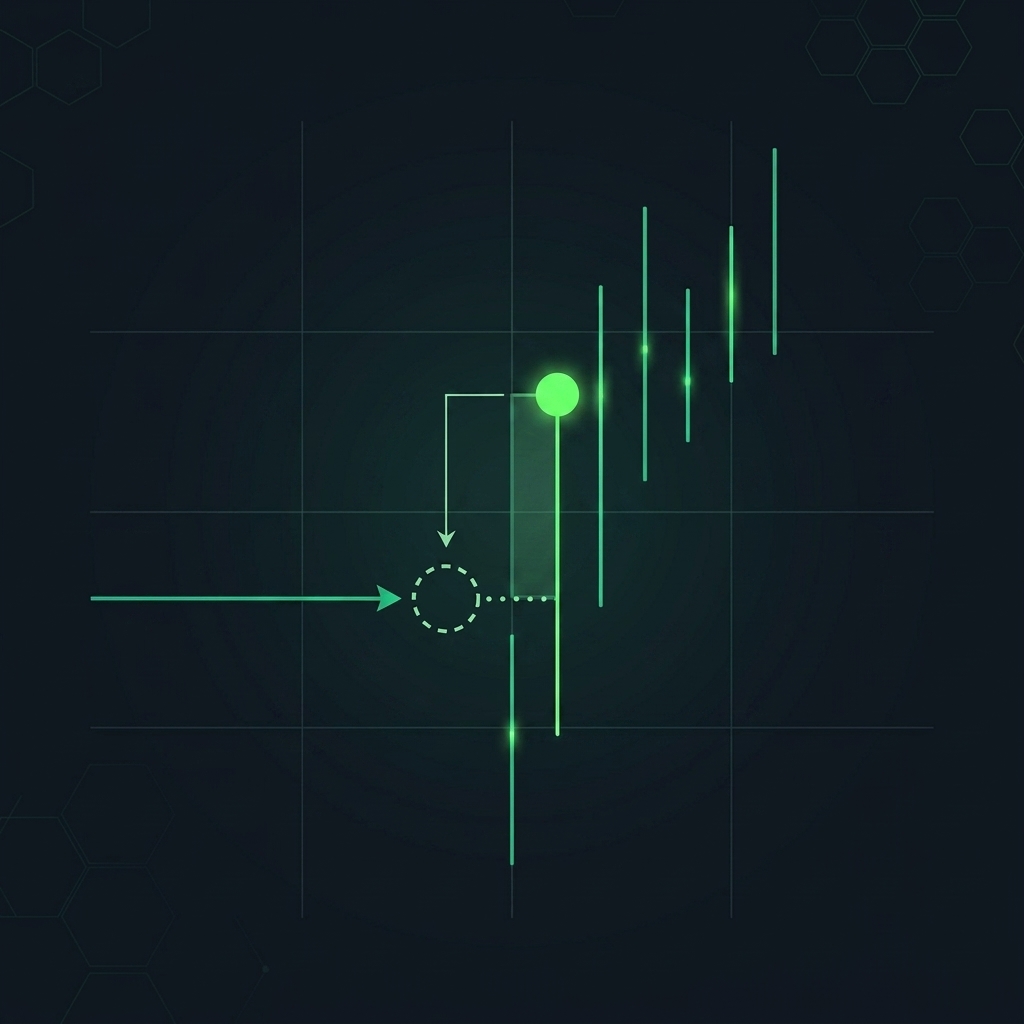
In normal market conditions, the execution price is exactly what the trader requested. However, during extreme volatility, liquidity disappears. The market price can gap directly past the Stop Loss level. When the broker finally executes the order, it is filled at a significantly worse price. Slippage can turn a planned 1% risk loss into an accidental 3% or 5% loss, instantly failing a proprietary firm evaluation.
Visual Explanation
Real Trading Example
A trader is long on GBPUSD and places a hard Stop Loss at 1.2500, intending to risk exactly $500 (1% of their account).
The US Federal Reserve unexpectedly announces an emergency interest rate hike. Instantly, buyers vanish from the market and sellers aggressively dump the asset. The price of GBPUSD crashes from 1.2520 directly to 1.2450 in a single tick, completely jumping over the trader’s 1.2500 Stop Loss.
The broker’s system triggers the Stop Loss at 1.2500, but there is no one willing to buy until 1.2450. The order finally executes at 1.2450. The trader experiences 50 pips of negative slippage and loses $1,500 (3% of their account) instead of the planned $500.
Common Mistakes
Common Mistake
Trading Through High-Impact News: Amateurs often attempt to trade through CPI (Consumer Price Index) or NFP (Non-Farm Payroll) releases, believing their tight Stop Loss will protect them. The massive slippage experienced during these specific windows is responsible for a massive percentage of blown accounts.
Professional Tips
Pro Tip
Positive Slippage Exists: Slippage works in both directions. If you have a Take Profit order and the market aggressively spikes in your favor, gapping past your target, you will experience positive slippage, closing the trade for a larger profit than you initially planned.
FAQ
Will a prop firm refund me for slippage?
No. Slippage is a normal function of live market mechanics. Top-tier prop firms simulate live market conditions, including slippage, to ensure traders are managing risk properly. Complaining to a firm about slippage during a news event will not reverse the loss.
Are Limit Orders immune to slippage?
Yes, mostly. A Limit Order (e.g., a Buy Limit or a Take Profit) can only be executed at your exact requested price or better. It cannot experience negative slippage. However, Market Orders (including Stop Losses and Stop Orders) are always susceptible to slippage.
How can I avoid slippage entirely?
The only guaranteed way to avoid slippage is to be flat (have no open positions) during known, scheduled high-impact macroeconomic data releases and over the weekend when markets are closed and prone to gapping on the Sunday open.
Still have questions? Ask TradeGuardian AI.
Get instant, cited answers from our proven library of frameworks and strategies.